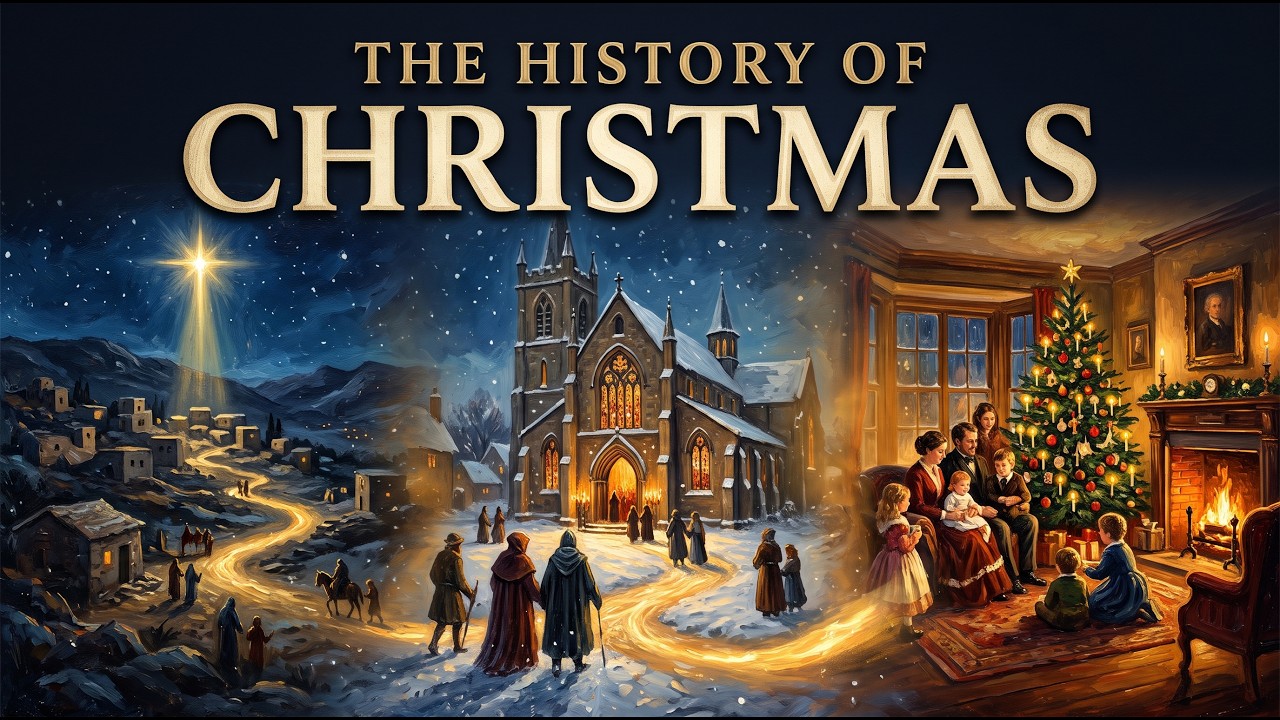
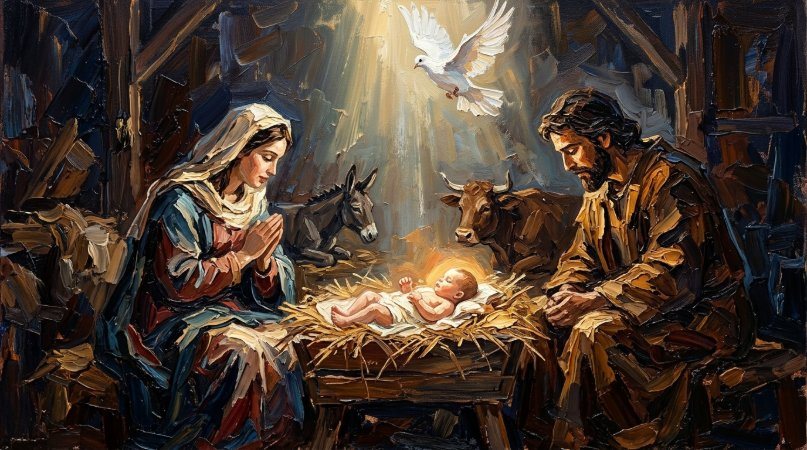
The most famous birthday in the world has no date in the book that tells its story. The Bible describes the night Jesus was born, with shepherds in a field and visitors following a star. But it never says which day it happened. And yet, every year, millions of people stop work, light trees, wrap gifts, and sing old songs on December 25.
How did that happen? The honest answer is a journey. Along the way, this celebration was argued over, banned by law, and nearly forgotten. It was also carried across oceans by songs so light that anyone could hold them. A Roman list, a medieval carol, a German tree, a paper card, a ghost story, and one quiet night on a battlefield all added their piece.
This article follows those pieces, one by one. It begins more than 2,000 years ago, with a birth, and with a missing date.
The Mystery of December 25
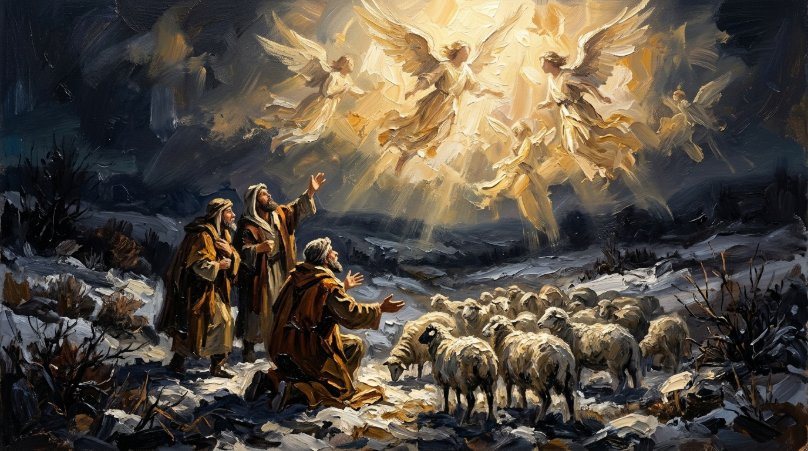
Two books in the Bible tell the story of this birth, and neither one mentions a calendar. The Gospels of Matthew and Luke give us the scenes we still picture today. Luke writes about shepherds in a field at night, and angels who appear with an announcement of peace. Matthew writes about visitors from far away who follow a star.
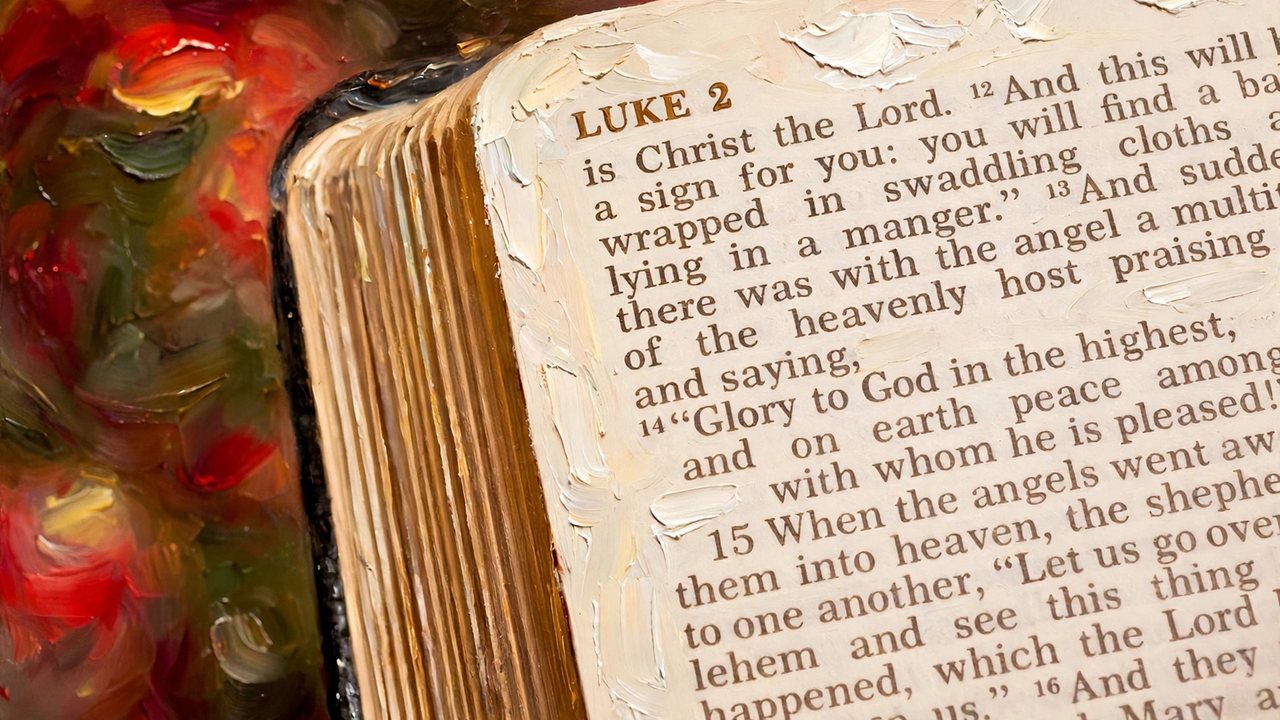
Those scenes gave Christians something precious to remember. But they left out one simple fact. No day. No month. So the mystery is real: if nobody wrote the day down, why does the world celebrate on December 25?
In the early centuries, Christians did not agree on an answer. Different communities chose different days, and some gave great importance to January 6, a date that still matters in several churches today. Then, in the fourth century, one date began to rise above the others in Rome. A Roman document called the Chronography of 354 holds a clue. One part of it, a list that scholars trace back to the year 336, already names December 25 as the day of Christ's birth. From Rome, the date spread outward across the Christian world.
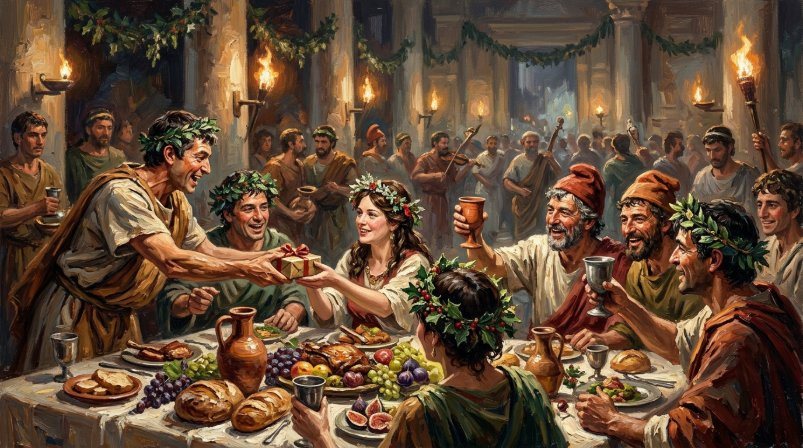
Why that day? Historians have asked for centuries, and two ideas lead the debate. The first looks at the Roman winter. Romans already loved their winter festivals, especially Saturnalia, a season of feasts, visits, and gifts. Near the end of December they also honored Sol Invictus, the Unconquered Sun. Many people claim Christmas was simply copied from these festivals. But that claim is bigger than the evidence, and careful historians treat it with caution.
The second idea comes from inside the early church itself. Some early Christians linked the date of Jesus's death to a day in spring, March 25, and connected that same date to the moment his life began. Count nine months forward from March 25, and you arrive at December 25. Scholars at Oxford and elsewhere still study this calculation idea today, and they still argue about it.
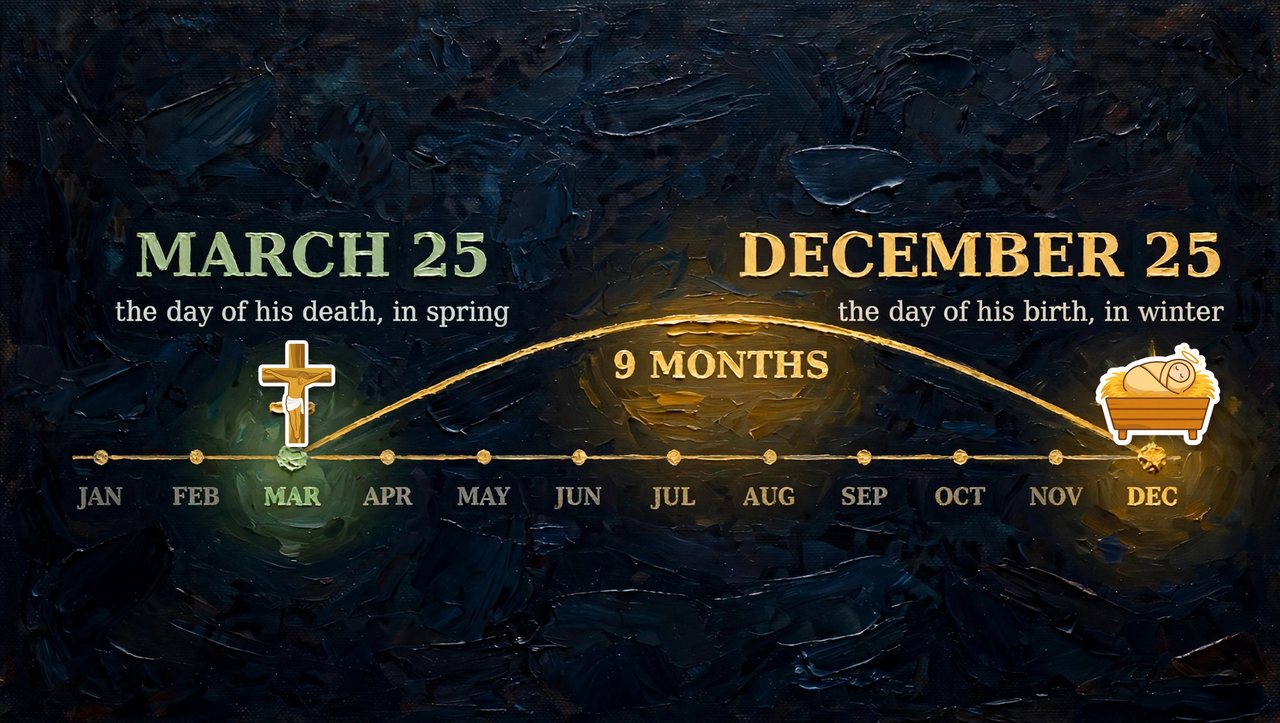
So here is the honest position. We can say when December 25 became important. We cannot fully explain why it was chosen. What we can say is this: the date held, and it spread around the world. And in Luke's story, the birth arrived with a promise of peace. That word, peace, will follow this whole story, all the way to a battlefield in 1914.
When Christmas Became a Season
In medieval Europe, Christmas refused to fit inside a single day. In many places it stretched into a full season, running through the dark weeks of winter and reaching Epiphany in early January. Churches filled their calendars with services. Families filled their homes with visits, music, and shared meals.
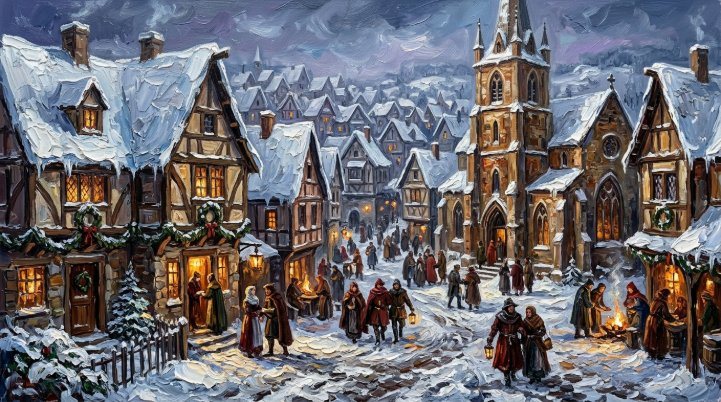
The season looked different through different windows. A rich household ate meat and drank wine. A poor family had far less, and felt the cold more. But rich and poor lived inside the same stretch of holy days, and the whole of society slowed down and turned toward the celebration together.
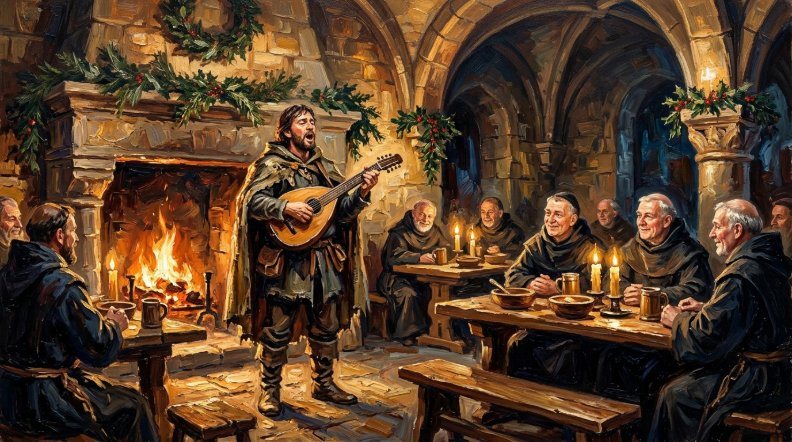
Some of the best evidence for this world is surprisingly small. It hides in old account books. At Fountains Abbey, a religious house in northern England, monks wrote down every payment they made. In their fifteenth-century accounts, there are payments to minstrels, the traveling performers who brought music and entertainment from place to place. Even a quiet house of prayer paid for music at Christmas, above all other seasons. Other records from the time mention gifts for servants, which tells us the celebration reached everyone in the household, not only the people at the top.
Music became part of the season forever. The word carol once meant many kinds of song, not only the church songs in shops today. A song weighs almost nothing. All it needs is voices. People carried carols from room to room, from a church into a street, and from parents to children, generation after generation.
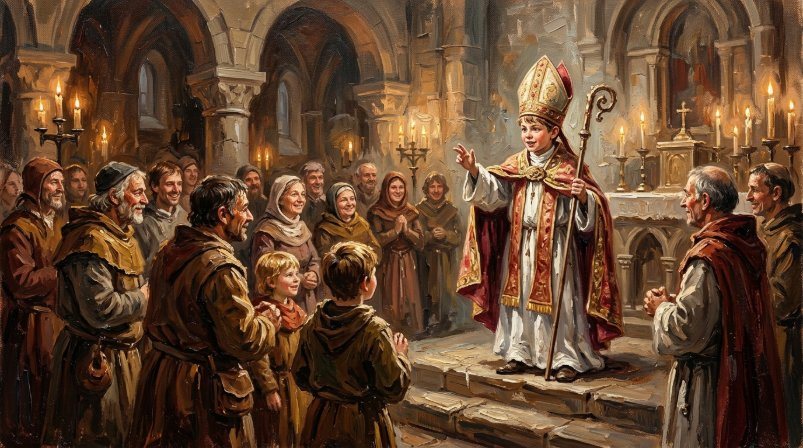
Medieval Christmas could also turn the world upside down. In parts of England, people kept a strange custom called the Boy Bishop. For a few days, a boy took the role of a bishop, one of the most important leaders in the church. He was not a real bishop, of course. That was the point. The normal order of life was playfully reversed, and everyone understood the joke.
So forget the quiet picture of one family beside one fire. Medieval Christmas was loud. It was public. It was alive. Songs, meals, decorations, and gifts were growing together, and the season had taken on a life of its own. You could hear it, taste it, and see it.
The Christmas That Was Forbidden
In June 1647, celebrating Christmas in England became an offense against the law. And here is the surprise: the people behind the ban were Christians themselves. A group called the Puritans wanted a purer faith, one that followed the Bible as closely as possible. They pointed to a real gap in the story. The Bible tells of Jesus's birth, but it never tells Christians to celebrate it on December 25.
The Puritans also disliked how the holiday was kept. There was heavy drinking. There was loud, wild fun. There were old church customs they wanted to leave behind. And England was already tearing itself apart in a civil war over religion and power, so Christmas was pulled into a much larger storm.
Parliament acted in June 1647 and removed Christmas as an official holiday, along with other old feast days. Popular memory blames one man, Oliver Cromwell, and pictures him canceling Christmas one morning at his desk. The real story is wider and less tidy. The ban came from a whole movement inside Parliament, not from one man's temper.
A law, however, is easier to pass than a habit is to break. Some people still closed their shops. Some still went to services. Some celebrated quietly in secret. In Canterbury, the attempt to enforce the ban and keep the city working on Christmas Day ended in a riot. A government can change a calendar quickly. It cannot so easily change what a day means to a family.
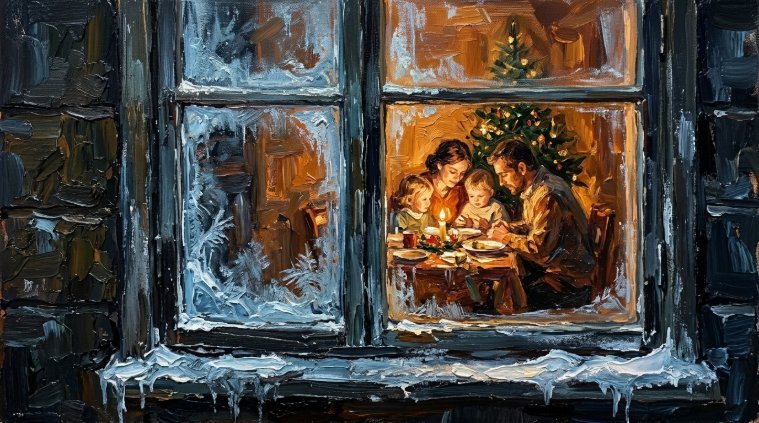
The same idea crossed the Atlantic Ocean. The Massachusetts Bay Colony in America was led by Puritans, and in 1659 it passed its own law against Christmas. Anyone caught feasting, or simply taking the day off work, could be fined 5 shillings. The holiday had become something you could be punished for enjoying.
The bans did not last. In England, the king returned to power in 1660, and official Christmas came back with him. Massachusetts quietly removed its ban in 1681. But the episode left a mark on the story. Even a beloved holiday can be argued over. It can be banned, defended, and fought about. Its place in people's lives was never as simple or as fixed as it looks today.
The Tree, the Card, and the Book
Walk into a home at Christmas today, and three objects will probably greet you: a tree, a pile of cards, and a story. All three found their modern shape in the 1800s, on top of roots that reach much further back.
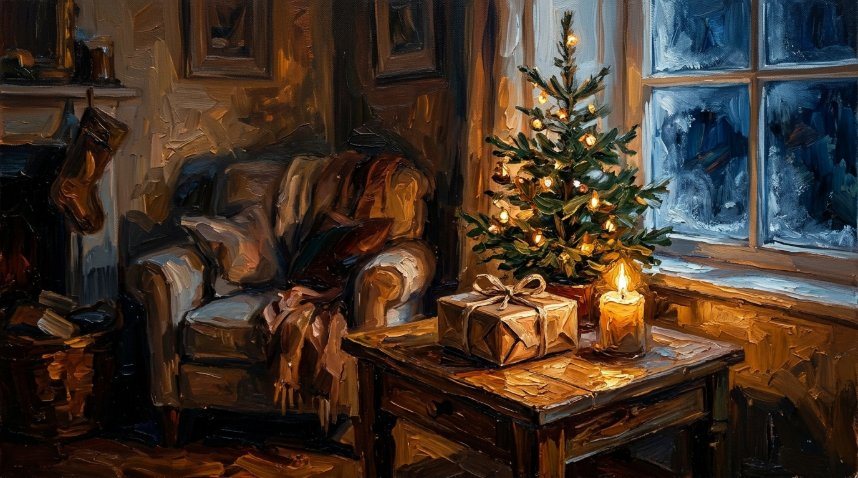
The tree is the oldest of the three. Its tradition grew slowly in German-speaking Europe, where people had decorated evergreen trees for centuries. One beautiful clue survives from Strasbourg in 1605. An old record describes Christmas trees standing inside homes, decorated with apples, paper flowers, and sweets. This was not the very first Christmas tree. The custom is older than that, and its true roots are unclear. But picture the scene: a living green tree inside a warm house, hung with things you could make, eat, or admire.
The evergreen carried a meaning anyone could read. Most trees lose their leaves in the cold. The evergreen does not. It stays green through the darkest months of the year, and that made it perfect for a winter festival of hope. Candles and ornaments joined the apples later, and slowly the tree became the tree we know.
Then a picture carried the tree to millions. In 1848, a popular British newspaper printed an image of Queen Victoria and Prince Albert standing with their children around a decorated tree. Albert had grown up in Germany, where the tree was at home, so the custom was already familiar at court. The royal family did not invent the tree, and it was already known in Britain. But now ordinary people could see it on a page and dream. If a tree was good enough for the queen's family, why not for theirs?
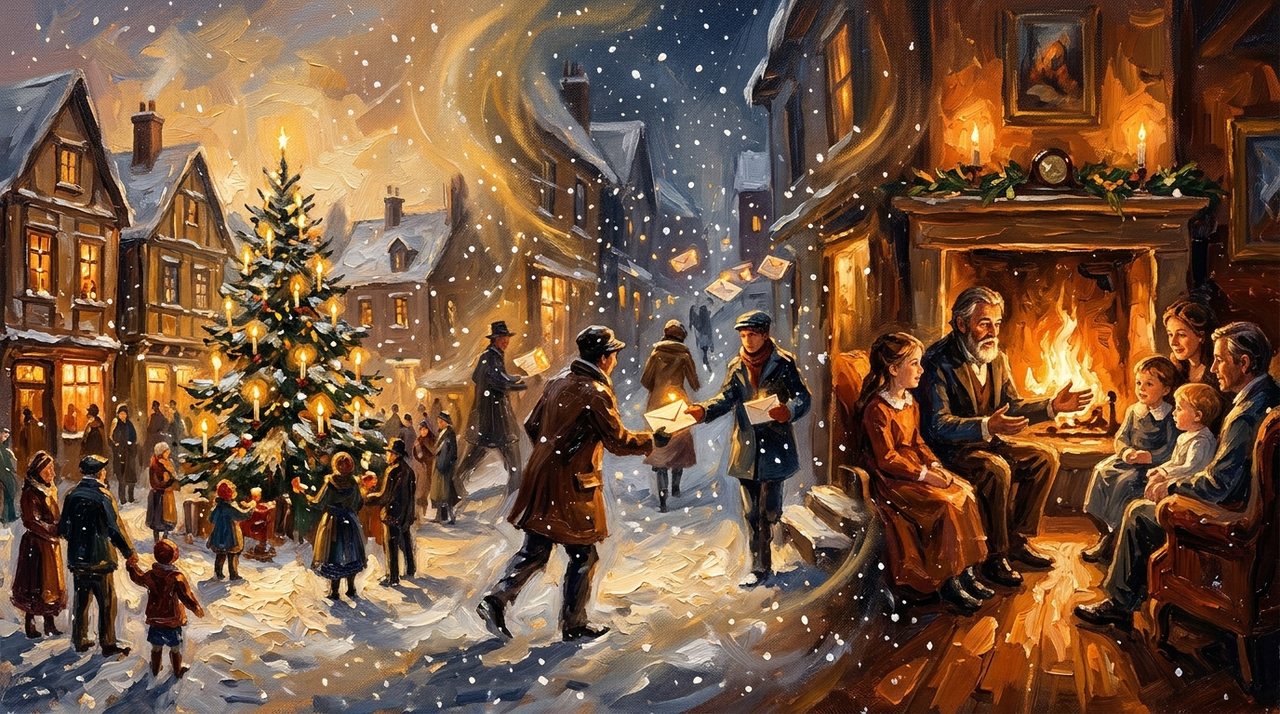
A few years before that picture, another tradition had begun to travel by post. In 1843, a busy British official named Henry Cole wanted a faster way to send Christmas greetings. He asked an artist, John Callcott Horsley, to design a card. It showed a family raising their glasses together, with scenes of kindness to the poor on either side. About 1,000 copies were printed, at a price of a shilling each, and the card was too expensive to be a success. The idea underneath it, though, was powerful. Soon letters became cheaper to send and printing improved, and one small card could carry a warm message across the country: I have not forgotten you.
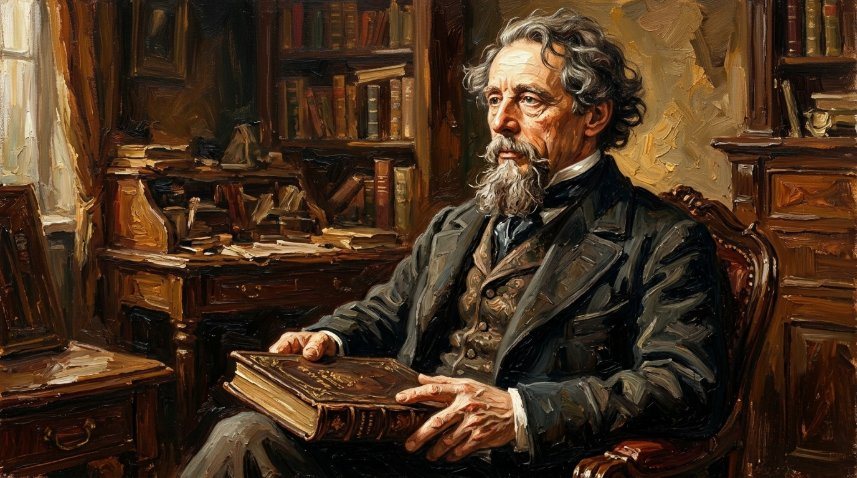
In that very same year, 1843, a book carried the same message much further. Charles Dickens had first planned to write a pamphlet about the poor, especially about children who worked long, hard hours in the growing industrial cities. Instead, he chose a story. A Christmas Carol introduced Ebenezer Scrooge, a rich man who cared for no one, until spirits showed him his past, his present, and a cold and lonely future. Dickens did not invent kindness at Christmas, and he did not invent the family holiday. But he gave those ideas powerful new life: generosity, responsibility, and the chance to treat another person better.
A tree, a card, and a book. Three different objects, one shared message. The celebration was becoming something you could see in a window, send through the mail, and read beside the fire.
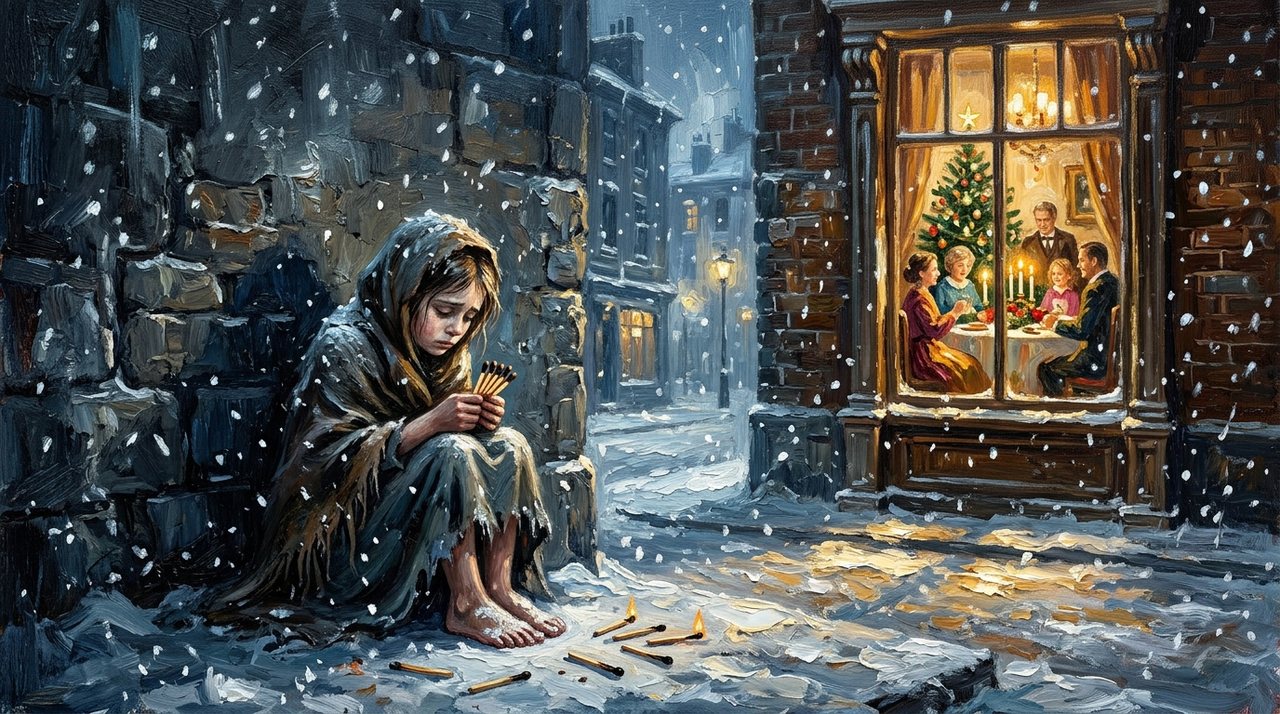
The Making of Santa Claus
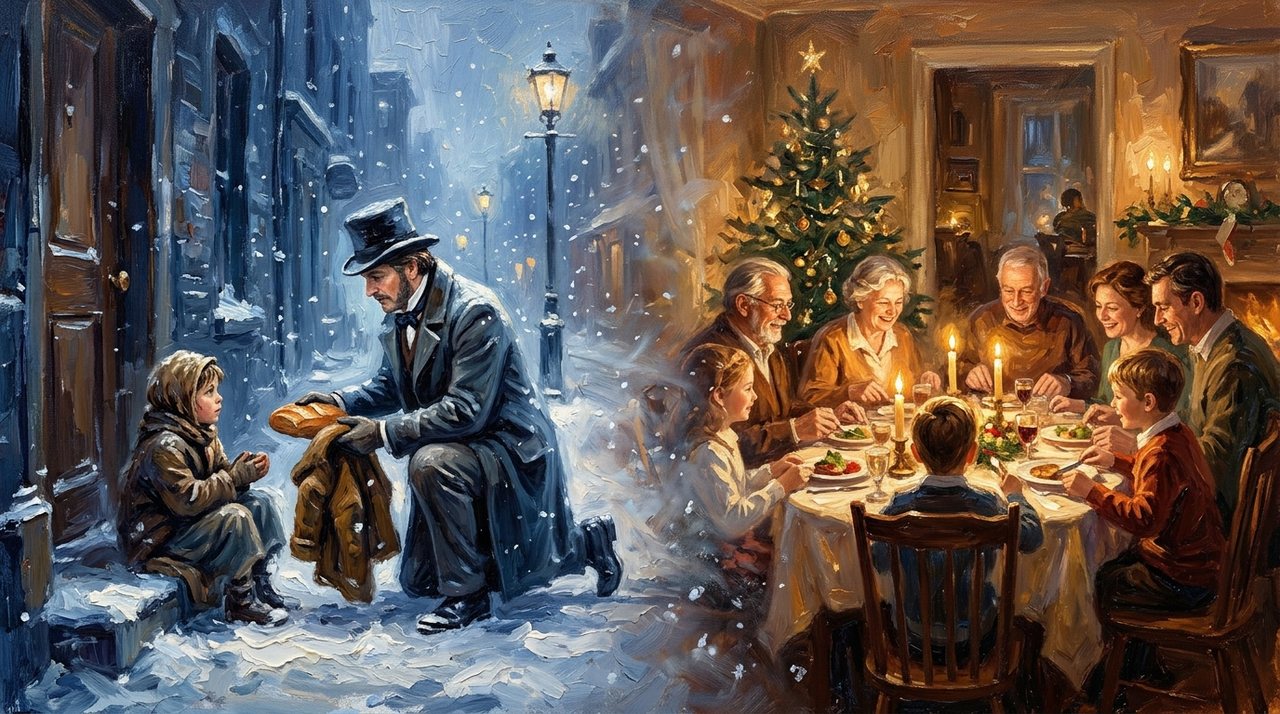
Nobody invented Santa Claus. That is the strange and honest truth of his story. He was not designed by one writer, one artist, or one company. He grew, the way Christmas itself grew, piece by piece.
His oldest root reaches back to a real man: Saint Nicholas, a bishop in Myra, in what is today Turkey. Stories gathered around Nicholas after his death. People told of his kindness, and of gifts he gave in secret to people in need. The most famous tale says he quietly left gold for a poor family with three daughters, so the girls could marry and escape a desperate future. These stories are legends, not proven history, and it is important to say so. But legends can shape the world too. Nicholas's memory taught Europe to connect this season with secret, joyful giving, especially to children and to the poor.
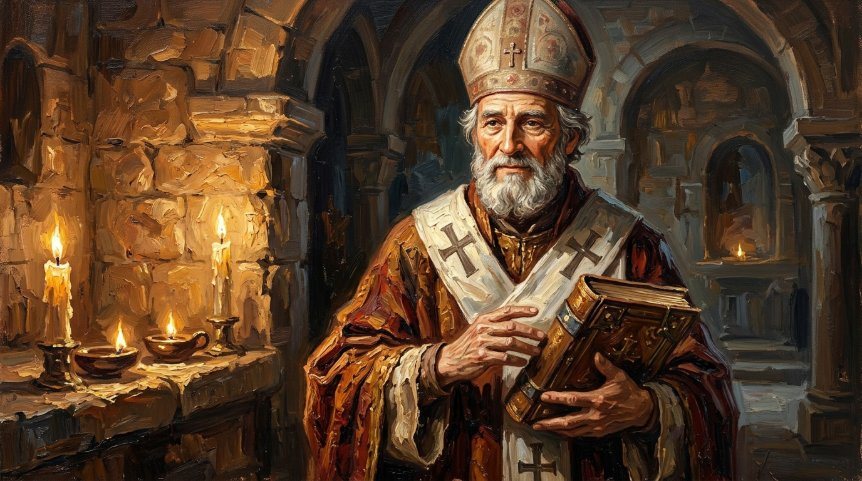
Then the figure began to travel and change. In Dutch tradition, Saint Nicholas became Sinterklaas. Dutch settlers carried their customs across the ocean to a growing city called New York. There, American writers picked the figure up. Washington Irving wrote about St. Nicholas in his playful history of New York, and the saint began to take on a new, more magical shape in American imagination.
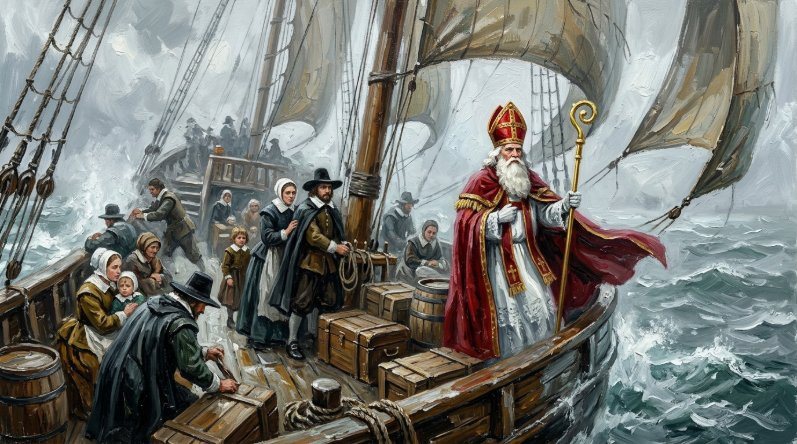
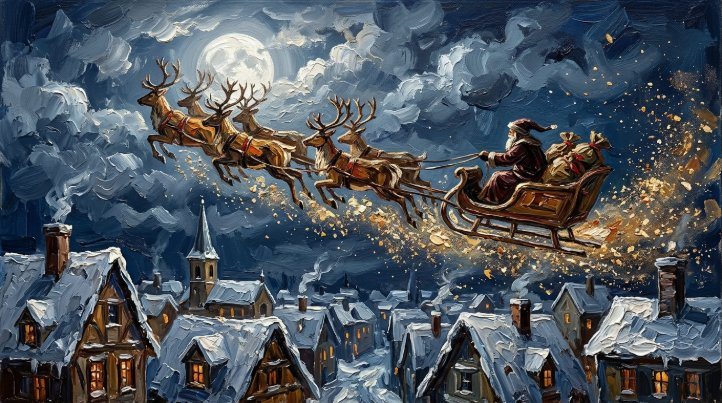
In 1823, a poem appeared in a newspaper and fixed that shape in people's minds. A Visit from St. Nicholas describes a visitor who arrives on Christmas Eve, rides a sleigh pulled by reindeer, slides down the chimney, and leaves presents behind. People still argue about who truly wrote the poem. Nobody argues about its power. Millions of children have fallen asleep inside its lines.
Artists then gave the visitor a face the whole country could recognize. Thomas Nast drew Santa Claus again and again for a popular magazine, Harper's Weekly, through the nineteenth century. His Santa was round, cheerful, and full of life. Later images carried that face into more and more homes, until one Santa looked back at the world from cards, books, and shop windows everywhere.
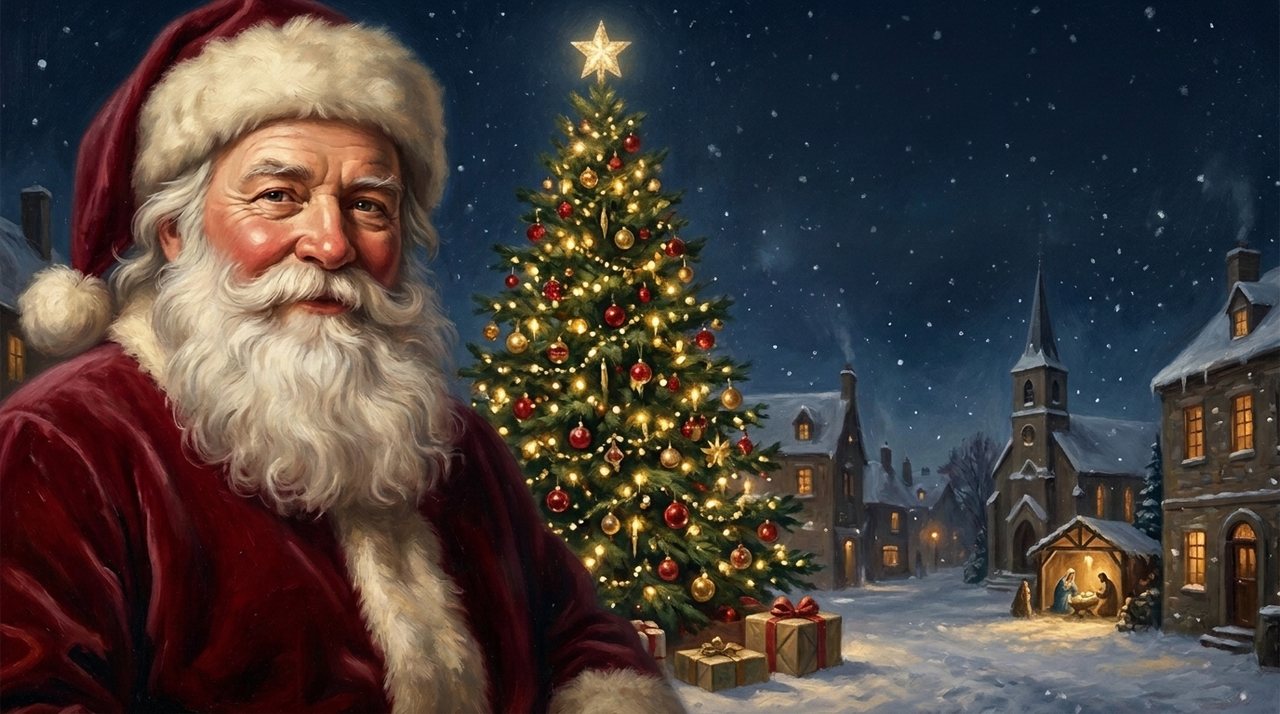
So who created the Santa Claus we know? A bishop, a legend, Dutch settlers, writers, a poem, and generations of artists. He came from faith, folklore, poetry, and pictures, and he came together the same way Christmas did, piece by piece.
A Moment of Peace in 1914
On Christmas Eve 1914, the sound that crossed the empty ground between two armies was not gunfire. It was singing.
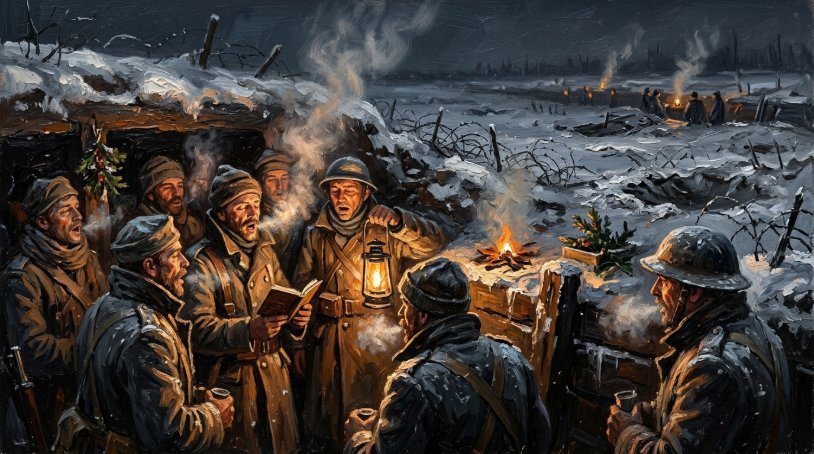
The First World War was only a few months old, but the early hope of a short war was already gone. On the Western Front, British and German soldiers lived in trenches cut into cold mud, sometimes so close that each side could hear the other. They shared the same cold, the same fear, and the same homesickness. And then Christmas came, to both sides at once.
The two armies also shared the same songs. Many of these men knew the same carols, and they sang them in different languages to the same tunes. Along parts of the German line, soldiers raised small fir trees and lit them with little candles, points of light in the dark. In some places, a carol began on one side and the same tune answered from the other. Voices started to call across no man's land, the empty and dangerous ground between the trenches.
Then, in a number of places, the guns went quiet. Soldiers climbed out of their trenches and walked into the open. Enemies met face to face. They spoke. They shook hands. They traded cigarettes, food, and small keepsakes. In some places, men gently gathered their dead together and buried them. In some places, soldiers kicked a football around in rough, friendly games. The famous story of one great organized match, though, is far less certain. The evidence supports small kickabouts, not a grand game.
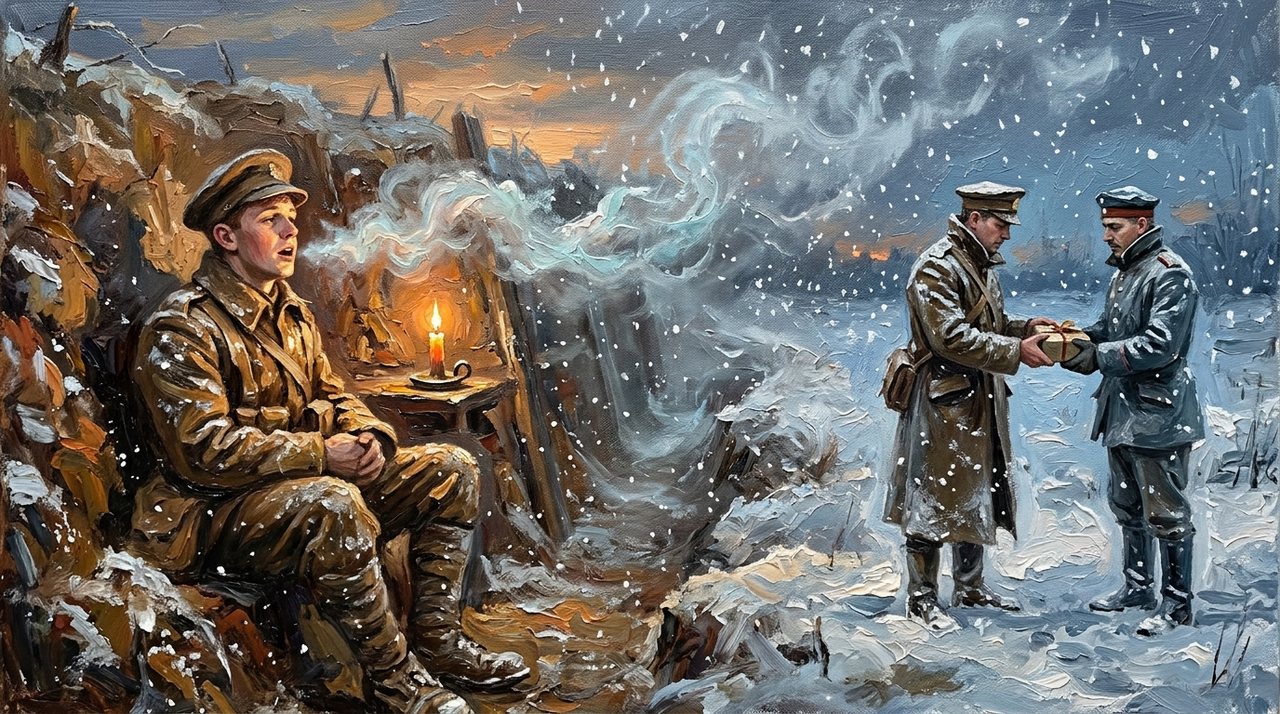
It is just as important to say what the truce was not. It was never one single event, and it did not happen everywhere along the line. It was many small, local moments of peace, chosen by ordinary men in particular places. Some officers were unhappy about it. In the years that followed, commanders on both sides gave firm orders to prevent any repeat. And the peace did not last. In most places the war returned within days, and it ground on for years, taking millions of lives. In a few quiet sectors, the silence held a little longer, but the war always came back.
And yet, the meetings happened. Men who had aimed rifles at each other stood together in the open ground. In some places, a song crossed the line before a man did. A small gift passed from one uniform to another. The season that had filled churches with songs and homes with bright trees had now reached a battlefield.
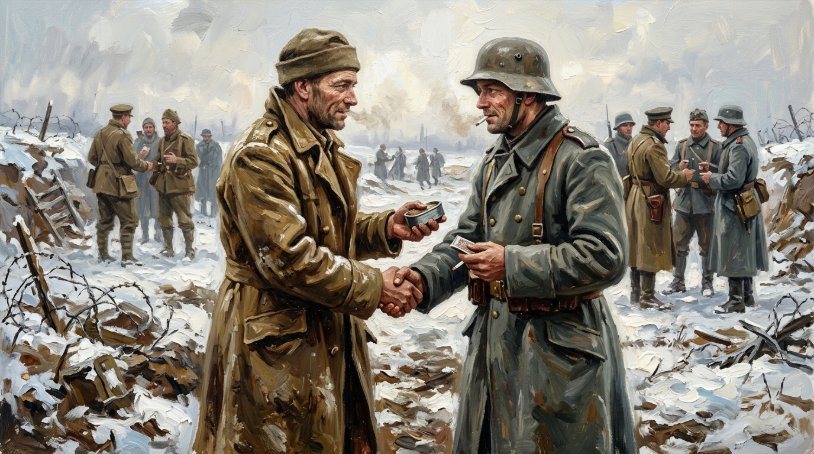
Think about the contrast. On one side, a world war, vast beyond imagining. On the other, a handshake. A cigarette. A shared song. A song could not end the war, and a handshake could not cancel the orders of generals. But for those few hours, enemies chose to meet as people. The promise of peace, first announced to shepherds in Luke's story, had found its strangest home.
The Christmas We Know
The Christmas tree did not stay beside the window. Electric lights carried its glow out into whole streets. Radio carried carols into living rooms, even into homes with no singer in the family. Cinema and television spread the pictures wider still, until the same tree, the same songs, and the same old man in red appeared in countries the tradition had never touched before.
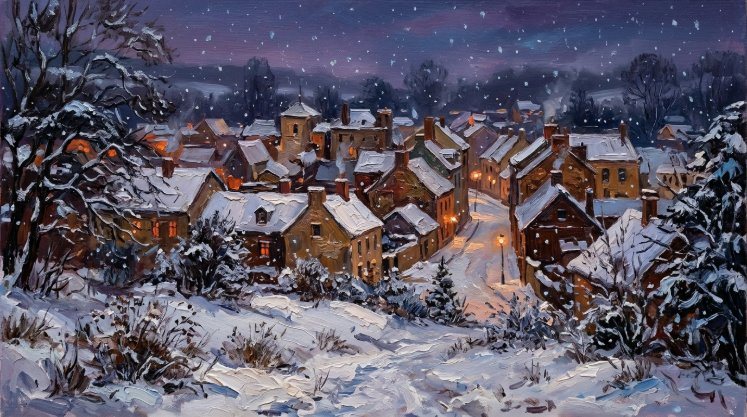
Families around the world joined in, each in their own way. They borrowed some customs and changed others. They kept their own older ways and laid the new ones gently on top. Christmas proved to be a traveler that learns the local language wherever it lands.
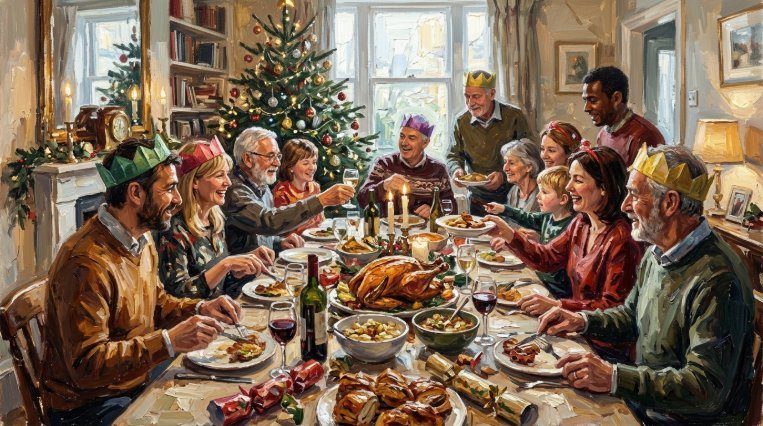
In many Christian homes, the heart of the day stayed the same: the worship, and the story of a birth in Bethlehem. For others, Christmas became a family day, or a social one. Some people celebrate it warmly without the faith behind it. There was never one single Christmas for the whole world, and there still is not.
A tree may stand beside a window. A card may travel across the world. A song may bring back the memory of someone far away. Each small thing carries a little of this long history inside it. And in the next part of this article, we will see just how differently that history can look when it settles in Mexico, the Philippines, Ethiopia, and Japan.
Christmas Around the World
Travel far enough, and Christmas changes its clothes, its food, and even its date. The story is the same, but every country adds its own piece.
In Mexico, the heart of the season is Las Posadas, nine nights of processions from December 16 to 24. Neighbors walk together by candlelight, singing, while two people play the roles of Mary and Joseph searching for shelter. Door after door stays closed to them, until at last one home opens, and the night turns into a party, often with a piñata for the children. Tradition tells that this custom began in 1587 at the convent of San Agustín in Acolman, where Augustinian friars held special Masses in the days before Christmas. It is a beautiful origin story, and it is best told as tradition tells it. Historians cannot confirm every detail of that beginning.
In the Philippines, Christmas is a season of light, and its symbol is the parol, a star-shaped lantern hung in windows, on gates, and along streets. The star recalls the star of Bethlehem, and in the city of San Fernando in Pampanga, lantern makers raise the craft to an art, building giant glowing parols for a famous lantern festival. The season also has a sound: bells before dawn. For nine mornings, from December 16 to 24, churches fill before sunrise for Simbang Gabi, a series of dawn Masses that ends with the Christmas Eve Mass. Many Filipinos say their Christmas season begins as early as September, which may make it the longest Christmas celebration in the world.
In Ethiopia, Christmas arrives on a different day entirely. The Ethiopian Orthodox Church celebrates the birth of Christ, called Genna, on January 7, because Ethiopia follows its own ancient calendar, with its own months and its own count of years. Many believers fast during the weeks before the feast, and the celebration centers on long church services. While much of the world is packing its trees away, Ethiopian families are just arriving at their Christmas Day.
And in Japan, Christmas tastes like fried chicken. In 1974, the company KFC began a Christmas campaign in Japan, presenting its fried chicken as a festive holiday meal. The campaign caught on far beyond what anyone expected. For many families in Japan, a Christmas meal now means chicken, ordered ahead and shared at home, in a country where Christians have always been a small minority. A marketing idea became a tradition, which may be the most modern piece of Christmas ever added.
Four countries, four different Christmases. A procession looking for shelter. A star made of light. A feast on January 7. A bucket of chicken. The celebration that Rome argued about and England once banned now belongs to everyone, and everyone has changed it a little.
Frequently Asked Questions About Christmas
Why is Christmas on December 25 if the Bible does not give the date?
The Gospels of Matthew and Luke tell the story of the birth but never name a day or a month. Early Christians suggested different dates, and by the year 336 a list in Rome already named December 25. Historians offer two main explanations. One points to Roman winter festivals such as Saturnalia and the feast of Sol Invictus in late December. The other, called the calculation theory, starts from March 25, a date some early Christians linked to the death and the conception of Jesus, and counts nine months forward. Neither explanation is proven, and scholars still debate them. The honest answer is that we know when the date became established, but not exactly why it was chosen.
Did Coca-Cola create Santa Claus?
No. Santa Claus existed in poems, stories, and pictures long before Coca-Cola used him in advertising. The 1823 poem A Visit from St. Nicholas gave him his sleigh and reindeer, and Thomas Nast's drawings in the nineteenth century gave him a familiar face. What Coca-Cola did, beginning in 1931, was commission a series of warm paintings by the artist Haddon Sundblom. Those paintings showed one consistent Santa, round, friendly, and human, and the advertisements carried that single image all over the world. Coca-Cola did not create Santa Claus. It helped fix one version of him in everyone's mind.
Was Christmas really banned?
Yes, more than once. In England, Parliament removed Christmas as an official holiday in June 1647, during the years when Puritan influence was strong. Oliver Cromwell is often blamed personally, but the ban came from Parliament and a wider movement, not from one man. In the Massachusetts Bay Colony in America, a law of 1659 fined people 5 shillings for feasting or taking the day off work. Neither ban lasted. England's ended when the king returned in 1660, and Massachusetts removed its law in 1681.
Did soldiers really play football during the 1914 truce?
Partly. During the Christmas Truce of 1914, British and German soldiers met in no man's land in many places, exchanged gifts and food, and buried their dead. There are records of small, rough kickabouts, with soldiers kicking a ball around for fun. The famous story of one big, organized match with a final score is not supported by solid evidence, and historians treat it as a legend that grew later. The truce itself was real, but it was many small, local moments of peace, not one single event along the whole front.
When does Ethiopia celebrate Christmas?
Ethiopia celebrates Christmas, called Genna, on January 7. The country follows the Ethiopian calendar, an ancient system with its own months, which places the birth of Christ about a week and a half after December 25. Many Ethiopian Christians fast in the weeks before the day and mark it with long church services. It is a good reminder that even the date of Christmas depends on which calendar a country calls its own.
A Celebration Built Piece by Piece
A card is just paper. A gift is just a thing. A song is just words and music, drifting on cold air. None of these things looks strong enough to survive an empire, a ban, or a war.
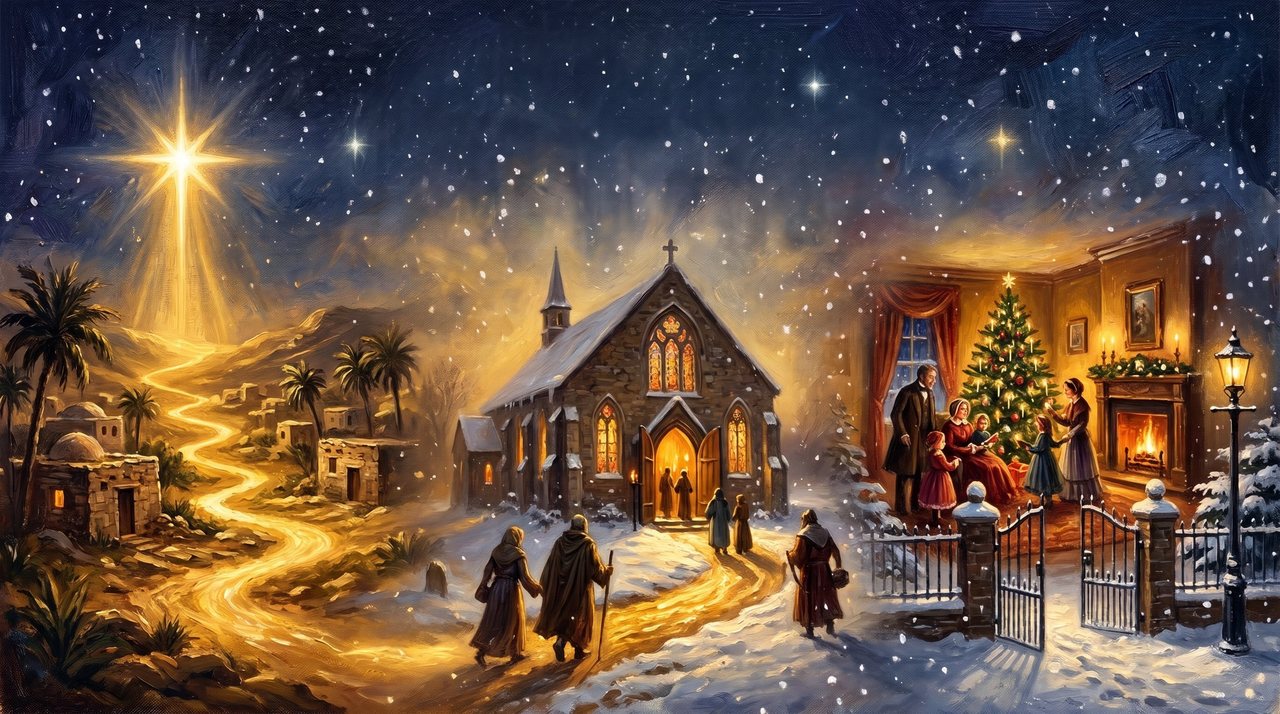
And yet they did survive, because people kept choosing them. A monk chose to pay a singer. A busy man chose to send a card that said, I have not forgotten you. Soldiers in the mud chose, for one night, to sing instead of shoot. Christmas was built piece by piece over many centuries, but its meaning is still being built now, by what people choose to do with it today.
So here is the question this story leaves with you. This year, which piece of Christmas will you carry to someone else?
Words to Take With You
Eight words from this story, in simple English. Take them with you.
evergreen
nounA tree or plant that stays green all through the year, even in winter.
The evergreen does not lose its leaves in the cold.
carol
nounA joyful song, especially one sung at Christmas.
Soldiers on both sides knew the same carols.
feast
nounA large, special meal eaten for a celebration.
Saturnalia brought feasts, visits, and gifts.
custom
nounSomething people in a place traditionally do, again and again.
The Boy Bishop was a strange medieval custom.
minstrel
nounA traveling singer and performer in medieval times.
The monks of Fountains Abbey paid minstrels at Christmas.
bishop
nounA senior leader in the Christian church.
Saint Nicholas was a bishop in Myra.
trench
nounA long, deep hole dug in the ground, where soldiers stayed during a war.
In some places, the two lines of trenches stood very close.
truce
nounAn agreement to stop fighting for a short time.
The Christmas truce was never one single event.
Summary
- The Bible tells the story of Jesus's birth but never gives the day, and scholars still debate why December 25 was chosen.
- By the year 336, a Roman list already named December 25 as the day of Christ's birth.
- In medieval Europe, Christmas grew from one day into a whole season of music, feasts, and playful customs.
- In the 1600s, Puritan governments banned Christmas in England and in Massachusetts, and the bans failed.
- A German tree tradition, the first printed Christmas card in 1843, and Dickens's A Christmas Carol shaped the celebration we know.
- In 1914, enemy soldiers stopped fighting in many places, sang the same carols, and met between the trenches.
Sources and Further Reading
We told this story using the sources below. If you would like to read more, these are good places to begin.
- University of Liverpool: The First Noël
- University of Oxford, C. P. E. Nothaft: the Calculation Theory
- London Museum: How Did Medieval Londoners Celebrate Christmas?
- English Heritage: Celebrate Christmas Like a Medieval Monk
- Historic England: Did Cromwell Really Ban Christmas?
- National Army Museum: The War on Christmas
- Commonwealth of Massachusetts: The Law Banning Christmas
- Victoria and Albert Museum: Victorian Christmas Traditions
- Victoria and Albert Museum: The First Christmas Card
- British Library: Charles Dickens's A Christmas Carol
- Oxford Academic: From Saint Nicholas to Santa Claus
- Library of Congress: A Visit from Santa Who You Might Not Recognize
- Imperial War Museum: The Real Story of the Christmas Truce of 1914
- Secretaría de Cultura, Mexico: Las Posadas (web-only chapter: Mexico)
- Cultural Center of the Philippines: Simbang Gabi at the CCP (web-only chapter: Philippines, verified for S18)
- Philippine Daily Inquirer: Pampanga's Role in Philippine Architecture, on the parol lanterns (web-only chapter: Philippines, verified for S18)
- Ethiopian Orthodox Tewahedo Church: Calendar (web-only chapter: Ethiopia)
- KFC: Kentucky for Christmas in Japan (web-only chapter: Japan)
- Coca-Cola: Did Coca-Cola Create Santa Claus? (FAQ: the Coca-Cola question)
A Note from HitoCast
This article was researched and written by the HitoCast editorial team. We cross-checked facts across 19 sources, including the University of Liverpool and the University of Oxford on the mystery of December 25, English Heritage and the London Museum on the medieval season, the Victoria and Albert Museum and the British Library on the tree, the card, and Dickens, and the Imperial War Museum on the Christmas Truce of 1914. If you spot an error or have a source to recommend, please email us at hi@hitocast.com. We update articles regularly.* ---